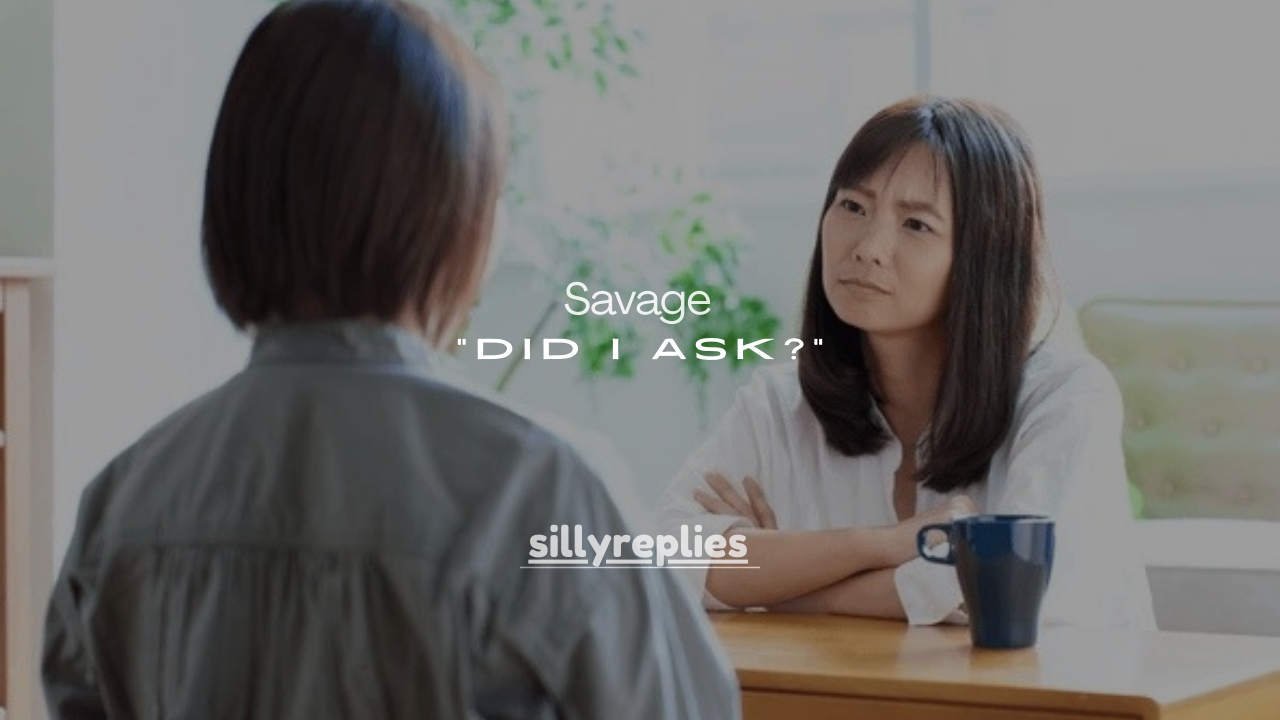
“Did I ask?” is one of those phrases that instantly shuts down a conversation and leaves the other person feeling dismissed, awkward, or insulted. It can sound sarcastic, rude, or unnecessarily harsh, even when said casually.
Most people struggle to respond in the moment because the phrase comes unexpectedly and puts social pressure on the listener to either stay quiet or react emotionally.
This guide covers funny, calm, savage, polite, and confident replies you can use in real-life situations without losing your composure or damaging relationships.
Check more here 120+Dry Text Memes That Scream “I’m Not Interested”
What Does “Did I Ask?” Really Mean?
“Did I ask?” usually means the speaker doesn’t value the information being shared or wants to regain control of the conversation.
Sometimes it’s sarcasm meant to tease, sometimes it’s annoyance, and sometimes it’s insecurity masked as confidence.
People use it to shut others down when they feel interrupted, challenged, or uninterested.
It becomes an insult when tone and timing are meant to embarrass rather than joke.
Is Saying “Did I Ask?” Rude or Just Casual?
Tone matters more than words, and “Did I ask?” can sound playful or cruel depending on delivery.
Among friends, it can be harmless banter, while in professional or public settings it often comes off as disrespectful.
Online conversations amplify rudeness because tone is harder to read.
Ignoring the phrase is often smarter when the goal is attention or dominance.
Best Responses to “Did I Ask?” (By Situation)
Funny Responses to “Did I Ask?”
- Guess not, but here we are
- No, but I answered anyway
- Surprise information drop
- Free knowledge, no receipt
- Just sharing the moment
- Thought I’d spice things up
- Consider it a bonus
- Oops, my bad for talking
- I’ll invoice you next time
- Must’ve slipped out
Witty & Clever Replies
- Not everything needs permission
- Conversations work both ways
- I assumed curiosity
- Silence felt awkward
- Context invited it
- Just contributing
- That’s how dialogue works
- Information travels freely
- Sharing isn’t asking
- You’re welcome anyway
Savage Comebacks (Use Carefully)
- Didn’t need approval
- Didn’t realize I had to
- I speak, not apply
- Not everything’s about you
- You don’t own the air
- Free country, last I checked
- Didn’t ask to be interrupted either
- Confidence looks better quiet
- Not your meeting
- Stay pressed
Polite & Calm Responses
- Just trying to help
- Sorry, I’ll stop
- Noted, thanks
- My mistake
- I misunderstood
- I’ll keep it brief
- Didn’t mean to interrupt
- All good
- I hear you
- Fair enough
Confident & Assertive Replies
- I was contributing
- I had something relevant
- I’ll finish quickly
- I’m allowed to speak
- Just adding context
- That’s my perspective
- I stand by it
- I’m comfortable sharing
- Let’s keep it respectful
- I meant no harm
What to Say When Someone Says “Did I Ask?” at Work
- I thought it was relevant
- Just clarifying the point
- I’ll keep it short
- Noted for next time
- I was offering input
- Understood
- I’ll follow up later
- Thanks for letting me know
- I’ll step back
- Appreciate the feedback
What to Say When a Friend Says “Did I Ask?”
- Relax, it’s conversation
- Just joking around
- Wow, okay
- Didn’t mean it like that
- Chill, I’m talking
- You’re dramatic
- It’s not that deep
- Just sharing
- Guess I’ll stop then
- Fair enough
Comebacks for Group Chats & Online Conversations
- Group chat means group input
- Scroll past it then
- Didn’t tag you
- Internet is optional
- Everyone’s free to speak
- Just adding value
- That’s how chats work
- No need to reply
- Calm down
- Keep scrolling
For deeper understanding of dismissive language and communication dynamics, studies shared by Psychology Today explain how people often use shutdown phrases to assert dominance or hide insecurity.
When You Should NOT Respond at All
- When it’s bait
- When emotions are high
- When power imbalance exists
- When silence is stronger
- When respect is already lost
- When it’s repeated
- When it’s online trolling
- When it’s not worth energy
- When they want reaction
- When walking away wins
Why the Right Response Matters
- Protects self-respect
- Controls tone
- Prevents escalation
- Builds confidence
- Maintains dignity
- Shows maturity
- Shapes future interactions
- Avoids regret
- Signals boundaries
- Preserves relationships
How to Choose the Best Reply in Any Situation
- Read the room
- Assess intent
- Match tone
- Stay calm
- Choose clarity
- Avoid ego
- Think ahead
- Protect reputation
- Keep it short
- Exit gracefully
Common Mistakes to Avoid
- Overreacting
- Insulting back
- Getting personal
- Raising voice
- Being sarcastic at work
- Proving a point
- Embarrassing others
- Dragging it on
- Losing composure
- Regrettable replies
Quick One-Line Responses (Short & Effective)
- Noted
- Moving on
- All good
- Fair enough
- Okay
- Cool
- Got it
- Understood
- My bad
- Next topic
Psychology Behind Dismissive Phrases Like “Did I Ask?”
- Control seeking behavior
- Social dominance
- Insecurity masking
- Ego defense
- Attention regulation
- Emotional shutdown
- Power assertion
- Avoidance tactics
- Low empathy moments
- Communication immaturity
Conclusion
Responding smartly to “Did I ask?” is about control, not winning. A calm, confident reply protects your dignity while avoiding unnecessary conflict. When you choose context over emotion, you stay in charge of the conversation. You don’t need permission to speak, but you do need awareness to respond wisely.
FAQs
What to reply when someone says I didn’t ask?
A calm or confident response like “I was just sharing” or “Noted” works best depending on context.
What is the best response to haters?
Silence or a short neutral reply often has more impact than emotional reactions.
How to answer a did you question?
Answer directly, briefly, and without defensiveness to keep control of the conversation.
How to give a strong comeback?
A strong comeback is confident, relevant, and controlled rather than aggressive or personal.